

As a One Health company focused on improving the health of people and animals, we encourage the discovery and development of innovative diagnostic tools that improve clinical outcomes for all.
Emerging research over the last decade suggests that flea and tick-borne pathogens, such as Bartonella, Lyme Borrelia, and Babesia, cause chronic illnesses that are difficult to diagnose and manage effectively. Current diagnostic methods are often not sensitive enough to detect active, low-level infections in patients. To develop more effective diagnostics, researchers must have a deep understanding of these microorganisms.
Our research and development team is comprised of PhD-level microbiologists with deep expertise on the pathobiology of these vector-borne pathogens. Furthermore, we have significant clinical experience that can help researchers navigate the complex science behind these emerging microbes in humans and animals.

CONTRACT RESEARCH SERVICES & ASSAYS
ASSAY DEVELOPMENT
We work with researchers at a number of top research institutions and privately-held companies in development and validation of improved diagnostics for bartonellosis, Lyme borreliosis, and other vector-borne diseases.
EPIDEMIOLOGICAL RESEARCH
We provide testing for prevalence studies of flea-and tick-borne pathogens in human and animal populations around the world. Large, controlled studies that focus on specific patient populations are sorely needed to help us understand disease burden across high risk populations, global regions, and in the blood supply system.
CLINICAL TRIAL TESTING
We provide in vitro testing for new therapeutic options targeting bartonellosis and borreliosis and in vivo testing for investigation of likely disease associations with a number of vector-borne diseases. We can help confirm infected patients enrolled in clinical trials using CLIA-validated testing methods.
BASIC RESEARCH INITIATIVES
There is always more to learn about the role that vector-borne disease plays in the lives of humans and animals. If you have research questions you need help with, we are happy to provide support and guidance.
Meet our Research & Development Team
Jennifer Miller, PhD; Director of Research & Development and Lab Operations
Dr. Miller holds a doctorate in microbiology and brings an exceptional and diverse background in microbiology research and education to Galaxy. With over 20 years of experience with vector-borne and zoonotic pathogens, including the Lyme disease spirochete Borrelia burgdorferi, and Leptospira interrogans, the causative agent of leptospirosis, Dr. Miller leads clinical assay development and the diagnostic test portfolio at Galaxy. Her experience as a professor of microbiology at North Carolina State University, where she developed her own research program and laboratory focused on in vitro and murine studies of vector-borne diseases, provides significant insights into optimal research designs and grant proposal strategy in support of Galaxy Contract Research Services.
Ed Breitschwerdt, DVM; Chief Scientific Officer
Dr. Breitschwerdt is an internist and professor of medicine and infectious diseases at North Carolina State University’s College of Veterinary Medicine. He is a co-director of the Vector Borne Disease Diagnostic Laboratory, which has been testing animals for vector-borne infections since 1984. Importantly, Dr. Breitschwerdt’s research at the NCSU Intracellular Pathogens Research Laboratory has produced significant research findings concerning the medical importance of Bartonella and other emerging infectious disease pathogens in both animal and human health. With over 300 peer-reviewed publications, Dr. Breitschwerdt is an internationally recognized leader in Bartonella research, diagnosis and treatment and has been consulted widely about an array of infectious diseases by many leading companies in the veterinary diagnostics, therapeutics, and vaccine industries. In recognition of his outstanding contributions to research and teaching, Dr. Breitschwerdt has received numbers awards, including the NCSU Holladay Medal for Excellence (2013), AAVMC Excellence in Research Award (2017), the AKC-CHF Canine Health Excellence Award (2018), the WSAVA Global One Health Award (2018), and the Melanie S. Steele Distinguished Professorship in Medicine (2018).
Ricardo Maggi, PhD; Chief Technical Officer
Dr. Maggi holds a doctorate in molecular biology and is an Associate Professor of Medical Microbiology at the College of Veterinary Medicine at North Carolina State University, where he directs research at the Intracellular Pathogens Research Laboratory. Dr. Maggi brings a diverse background in molecular biology and bacterial culture to Galaxy. He played an integral role in the development of our proprietary diagnostic technology, BAPGM, and leads molecular assay development and bacterial culture for the Galaxy R&D team.
Speak with our scientists today.
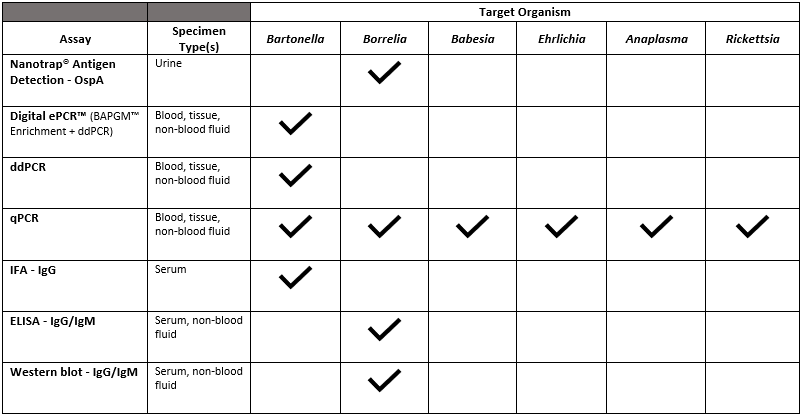
We offer both CLIA-validated molecular and serological assays and Research Use Only (RUO) pathogen testing for a growing range of zoonotic, vector-borne infectious agents, including Bartonella spp, Borrelia spp., Anaplasma spp., Ehrlichia spp., Babesia spp., and Rickettsia spp.