Early Lyme Disease Testing: What Clinicians Need to Know

Lyme disease testing statistics and insights

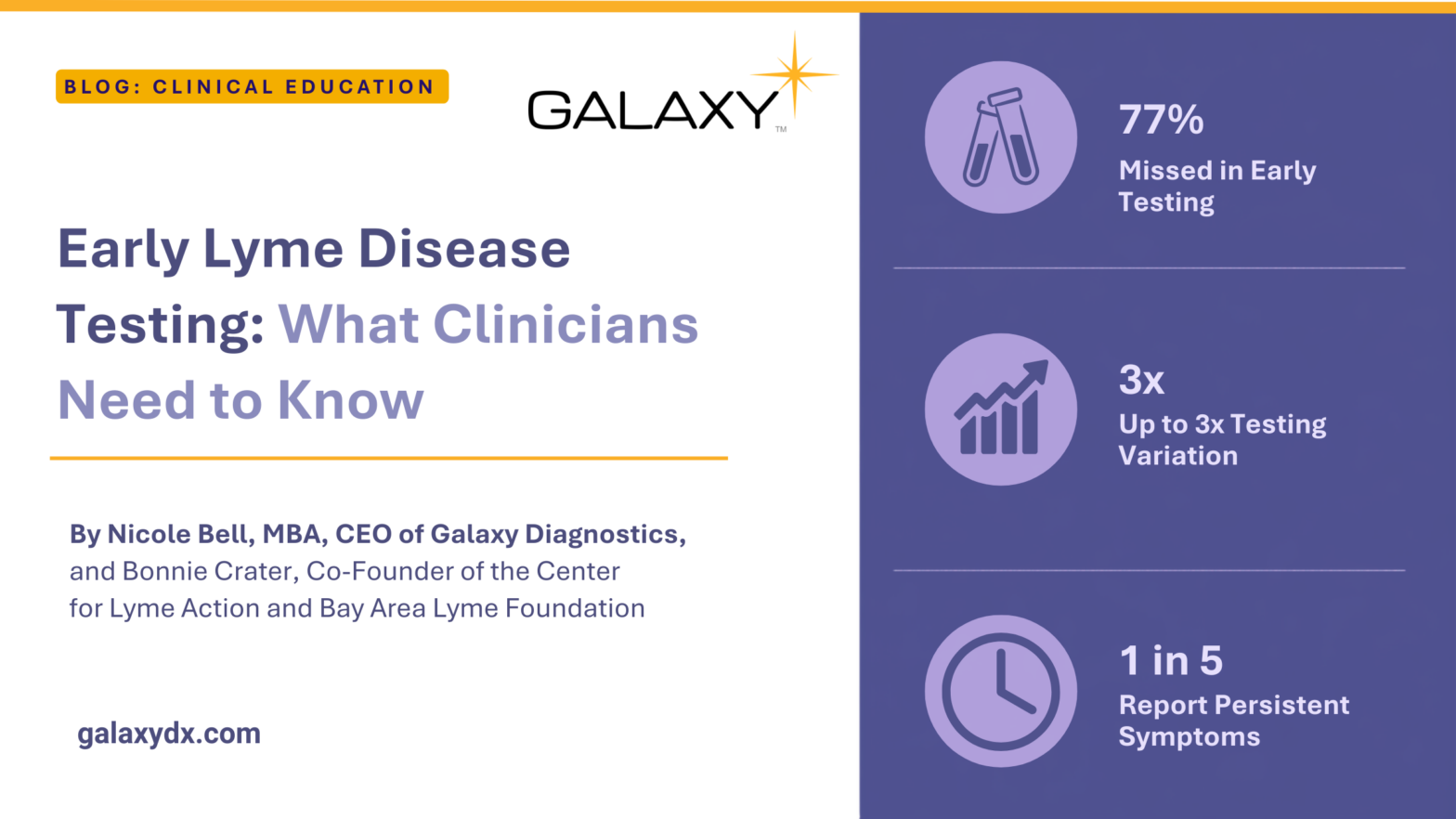
By Nicole Bell, MBA, CEO of Galaxy Diagnostics, and Bonnie Crater, Co-Founder of the Center for Lyme Action and Bay Area Lyme Foundation. Moderated by Dr. Amy Offutt, MD, Immediate Past President of the International Lyme and Associated Diseases Society (ILADS) Summary: Research published between 2024 and 2026 sharpens understanding of why early Lyme disease… Continue reading Early Lyme Disease Testing: What Clinicians Need to Know

After the Tick Bite: What Clinicians Need to Know

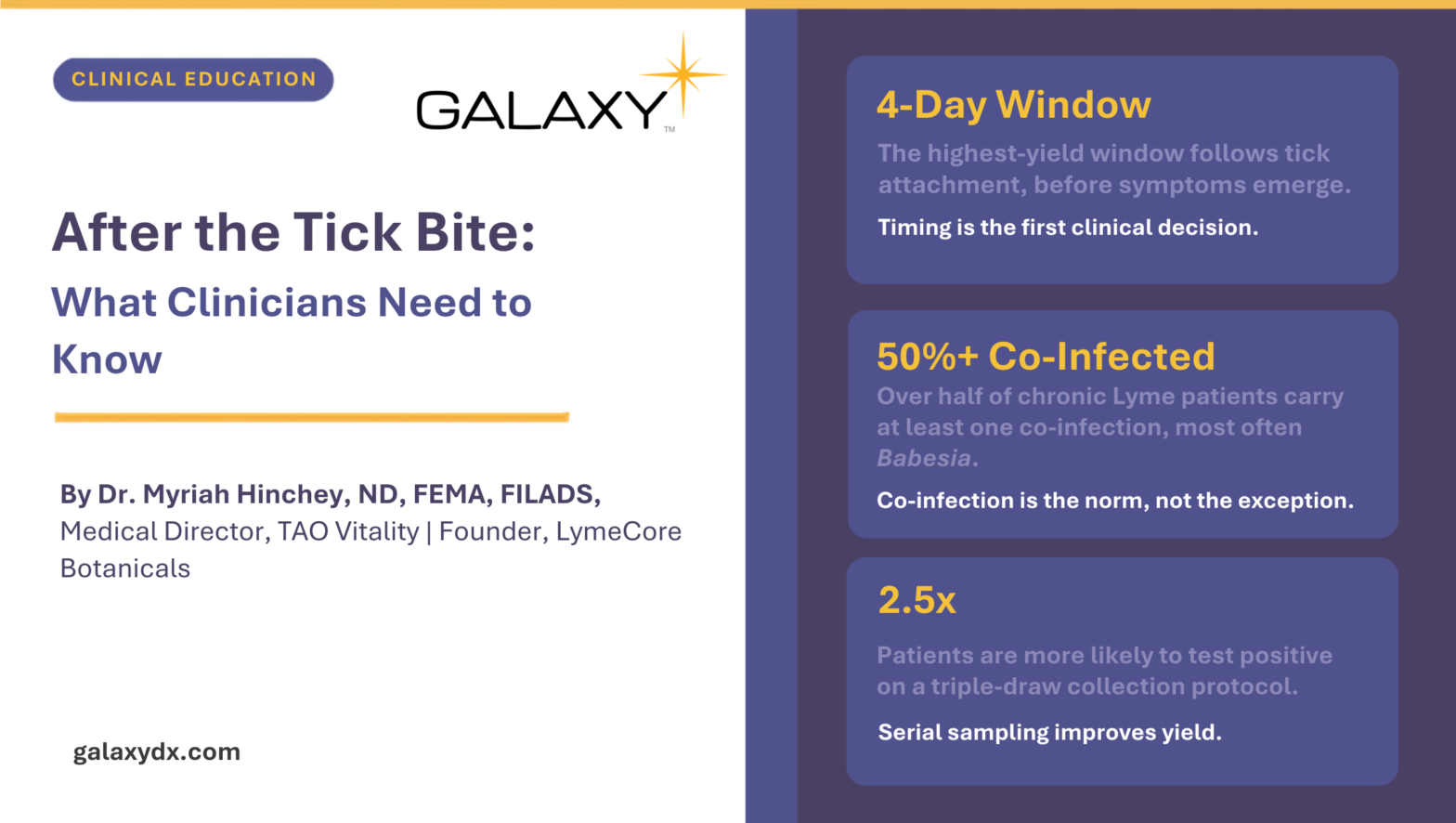
By Dr. Myriah Hinchey, ND, FMAPS, FILADS, Medical Director, TAO Vitality | Founder, LymeCore Botanicals Summary: The acute window following a tick bite is the highest-yield period for early detection and also the period when standard diagnostic approaches are least reliable. A sound tick bite testing protocol for this window must account for the biological… Continue reading After the Tick Bite: What Clinicians Need to Know

Bay Area Lyme Ventures Invests in Galaxy Diagnostics to Advance Tick-Borne Disease Testing

Bay Area Lyme Ventures invests in Galaxy Diagnostics to advance innovation in tick-borne disease diagnostics.

Partnership Aims to Accelerate Innovation in Diagnostic Tools for Patients with Complex Tick and Vector-Borne Illnesses DURHAM, N.C., June 2nd, 2026, Galaxy Diagnostics, a leader in advanced vector-borne disease testing, has announced a strategic investment from Bay Area Lyme Ventures, the newly launched impact investment fund created by Bay Area Lyme Foundation to accelerate innovation… Continue reading Bay Area Lyme Ventures Invests in Galaxy Diagnostics to Advance Tick-Borne Disease Testing

The Babesia Detection Problem: Why Results Differ in Low-Level Parasitemia

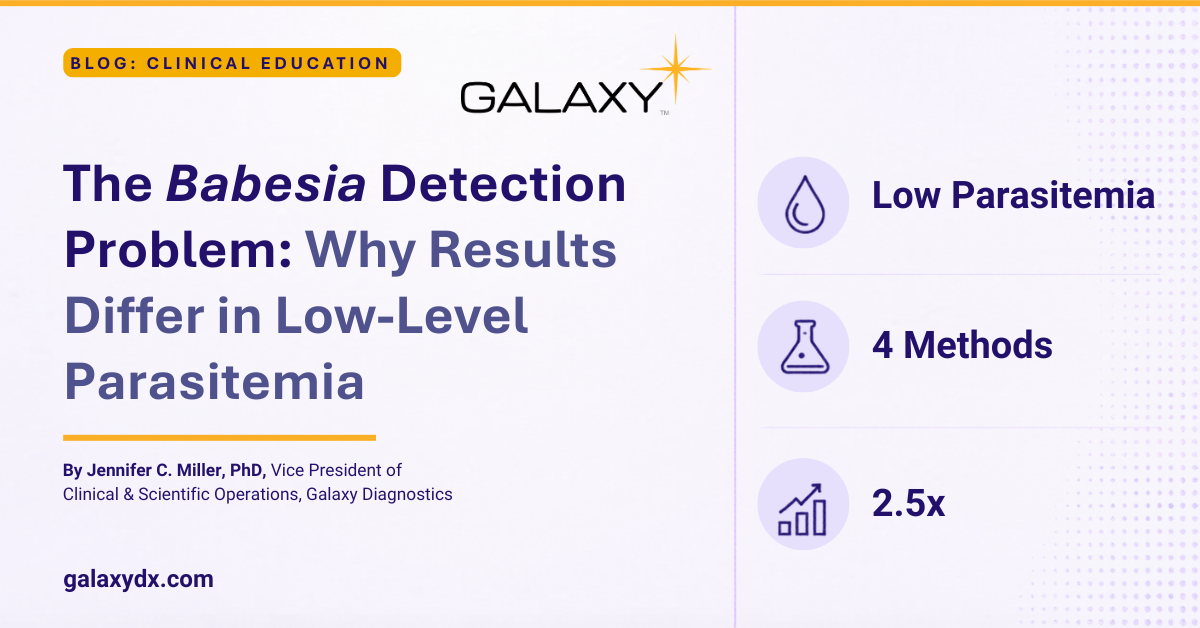
By Jennifer C. Miller, PhD, Vice President of Clinical & Scientific Operations, Galaxy Diagnostics   Summary: Babesia is an intraerythrocytic parasite that has become one of the most persistent diagnostic blind spots in tick-borne medicine. Despite growing clinical recognition, standard testing methods frequently fail to detect Babesia in chronic presentations, where parasitemia is low, symptoms… Continue reading The Babesia Detection Problem: Why Results Differ in Low-Level Parasitemia

REPLAY: The Black Box of Vector-Borne Pathogens

Babesia is often present but rarely detected. In this clinical webinar, learn why standard diagnostics fall short, how pathogen biology creates testing gaps, and how to interpret discordant results with confidence.

REPLAY: Bartonella: The Blind Spot Pathogen

When Bartonella infections persist, present atypically, or defy standard testing, understanding why they are missed is critical. This webinar examines Bartonella’s stealth biology, non-traditional transmission routes, and diagnostic blind spots through clinically grounded case studies, providing actionable insight for providers navigating complex vector-borne disease presentations.