

Vector-Borne Disease Testing Panel
Borrelia, Babesia and Bartonella are stealth pathogens, low-abundance, slow-replicating organisms that suppress immune response and evade detection. Although lab-developed testing has improved, most diagnostics still rely on indirect markers, missing the root of the problem.
Every assay we use is optimized in-house and rigorously validated by our team of scientists to ensure clinical relevance, so providers get actionable results even when other tests fall short.
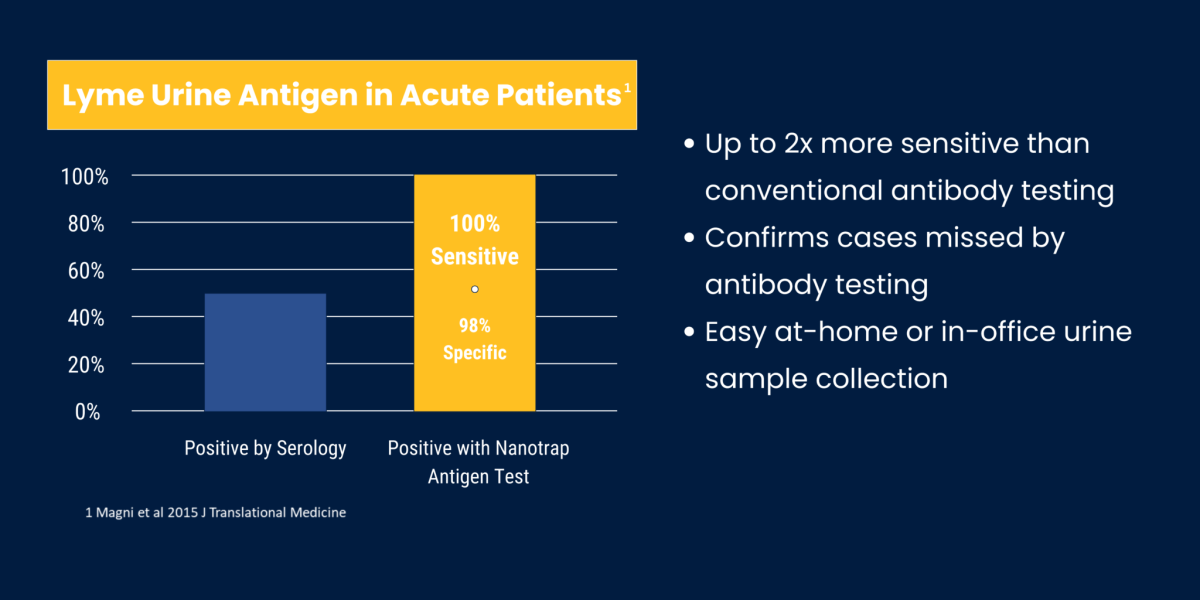
Nanotrap® technology captures and concentrates Borrelia antigens directly from urine, dramatically increasing sensitivity, especially in early-stage Lyme and complex chronic cases. Unlike antibody tests, it detects the pathogen itself, not the body’s immune response.
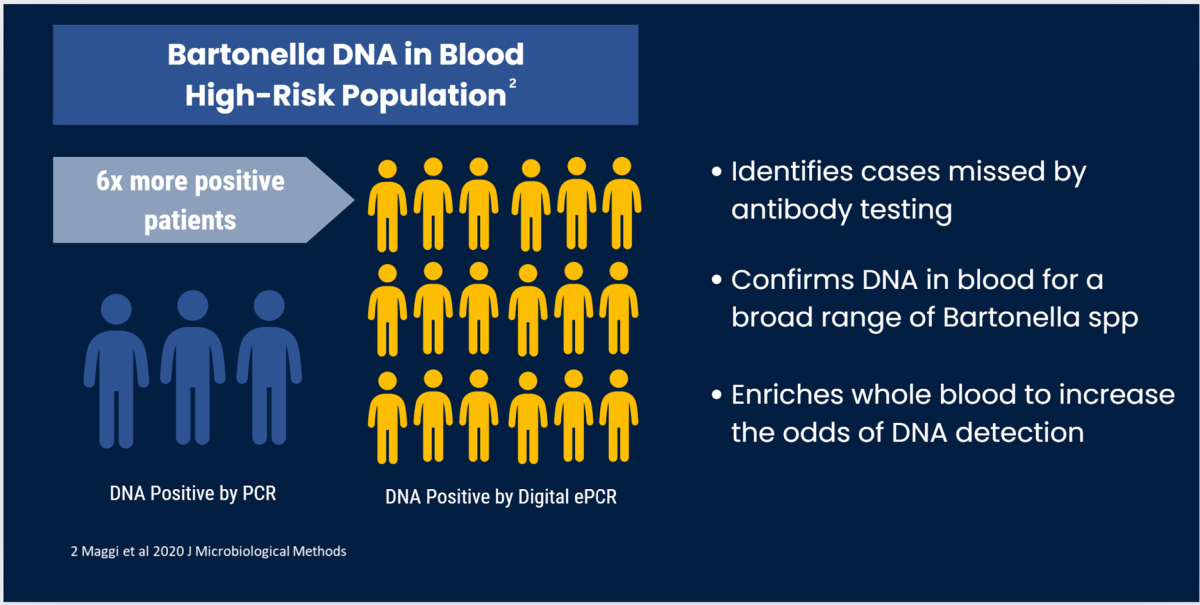
Galaxy's Digital PCR (dPCR) breaks samples into thousands of partitions, detecting trace amounts of pathogen DNA that other technologies miss. Originally pioneered in oncology, now adapted for infectious disease.
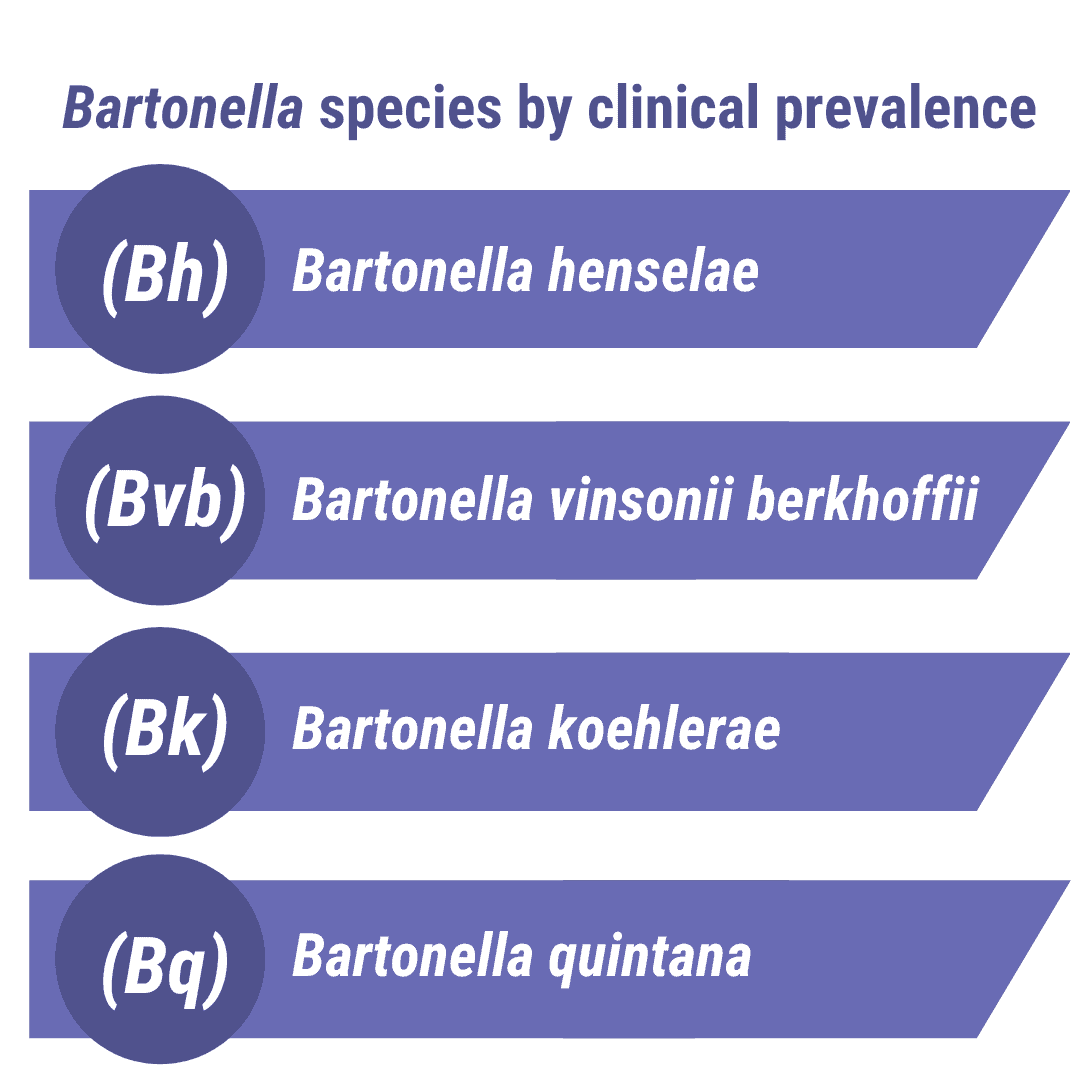
The most comprehensive Bartonella IgG IFA panel available, targeting the four species most associated with human disease, built using clinical isolates, not commercial slides and reported as titers.
Get the direct evidence needed to guide next steps, not just past exposure.
Helps you catch pathogens others miss before they become harder to treat.
Vetted by published data, not just internal claims.
You shouldn’t need a specialist to interpret your results, though we’re here if you need us.






See which direct detection method fits your next case, urine antigen, digital PCR, or Bartonella serology.
Galaxy Diagnostics is a CLIA-certified reference laboratory established in 2009 to commercialize diagnostics for stealth vector-borne pathogens, with an original focus on Bartonella. The company exists because conventional workups routinely miss organisms that circulate at low, intermittent burdens and sequester in tissues. Its core molecular and serologic tests are built on platform technologies developed and licensed from foundational research at North Carolina State University (NCSU) and other partners. Galaxy today offers urine antigen testing for Lyme, Digital PCR for Borrelia, Babesia and Bartonella and lastly a Bartonella IFA Serology Panel including 4 common species.
The Nanotrap and a serology test answer different questions entirely. Nanotrap looks for a shed protein, evidence the pathogen is present, while serology looks for a historical immune response. Direct testing like Nanotrap is most useful for acute Lyme Borrelia exposure, and it also serves as a valuable check in chronic, post-treatment Lyme disease syndrome cases to see whether the pathogen is still present.
dPCR partitions a sample into thousands of nanoscale reactions, each scored independently after amplification, and applies Poisson statistics to yield absolute quantification without a standard curve. This partitioning confers two decisive advantages for stealth pathogens: high tolerance to the PCR inhibitors abundant in blood, and superior precision at very low template concentrations. These are precisely the conditions under which conventional and qPCR methods lose sensitivity.
Galaxy points providers to Dr. Breitschwerdt’s published research, and more recent work with Dr. Maggi, showing a clear increase in diagnostic yield with serial collection versus a single draw, attributed to the cyclical and low-yield presence of these pathogens in the blood. Galaxy sees a 2.5x higher positivity rate in triple draws compared to single draws.