
By Dr. Chris Turnpaugh, DC, DACNB, AFMCP, Founder and President, Turnpaugh Health and Wellness Center | Member, Galaxy Diagnostics Clinical Advisory Board
Disclosure: Dr. Turnpaugh is a member of Galaxy Diagnostics’ Clinical Advisory Board. The webinar this article is drawn from was presented in partnership with Quicksilver Scientific and Troscriptions. Full disclosure appears later in this article.
Summary: Patients with complex, multi-system vector-borne illness rarely present with a clean diagnostic story, and prior antibody testing already in the chart may not explain what the patient is currently experiencing. This post, drawn from a Galaxy Diagnostics educational webinar presented by Dr. Chris Turnpaugh, a member of Galaxy’s Clinical Advisory Board, explains why serology alone often cannot answer the central clinical question in these cases: is the pathogen still present, or is the immune system still recovering from one that came and went? It also explains why serial sampling may improve the opportunity to detect low-abundance pathogens that may not be captured in a single collection, with the published serial-sampling evidence discussed here specific to Bartonella. [1]
Table of Contents
Complex vector-borne illness is increasingly common in clinical practice, and increasingly difficult to resolve with alternative testing alone. This article synthesizes key clinical reasoning from a Galaxy Diagnostics educational webinar and outlines the diagnostic, biological, and interpretive factors that shape how direct detection fits into the evaluation of chronic, multi-system presentations.
The Diagnostic Gray Zone: When Testing Doesn’t Match the Clinical Picture
Many patients with complex chronic illness are already sitting in your practice, often labeled with something else. A patient presents with years of multi-system symptoms: fatigue, cognitive changes, joint pain, autonomic symptoms, food reactivity. Prior lab work exists, sometimes extensive, and yet the results do not fully explain the clinical picture in front of the provider.
This disconnect often reflects a mismatch between the clinical presentation, the biology of the suspected pathogen, the type of test that was run, and what that test is actually capable of showing. Standard antibody testing was designed to answer whether the immune system has encountered a pathogen. It was not designed to answer a different, equally important question: is that pathogen still present now.
Many clinicians already have a working model for this distinction from the COVID era. Acute COVID is an infection problem. Long COVID reflects a post-infectious dysregulation syndrome that antiviral treatment cannot resolve, because the virus itself is gone. The same logic applies to vector-borne illness: the method used to find the pathogen determines which clinical problem is actually being treated.
What This Means for Testing
Testing should be selected based on the specific clinical question being asked: was there ever exposure, or is a pathogen detectable right now. When those two questions get conflated, whether through a single antibody panel or through repeat testing on that same panel, the diagnostic picture can stall.
Why Serology Alone Leaves a Gap
An antibody test tells you the immune system has seen a pathogen before. It does not tell you the pathogen is still there.
Once the immune system forms a memory response to Borrelia, Bartonella, or Babesia, that antibody signature can persist long after the pathogen itself is gone. A positive IgG can reflect an old exposure just as easily as a current one. Retesting the same patient every three to six months often produces the same positive antibody result, whether or not an active pathogen is behind it.
IgM adds another layer of complexity. IgM antibodies are well documented to be polyreactive, meaning a dysregulated immune system can generate positive IgM results without a recent infection driving them. A panel of IgM positives across a long list of pathogens is more often a signal of immune polyreactivity than evidence of many simultaneous infections.
What This Means for Testing
A positive antibody result confirms the immune system has encountered the pathogen. It does not, on its own, confirm the pathogen is present now. This is the gap that direct detection is designed to close.
The Diagnostic Landscape: What Each Method Measures
Direct detection and serology are not interchangeable, and understanding what each test actually measures is essential to interpreting results accurately. The table below summarizes how the methods discussed in this article compare.
Test Type | Method | Direct / Indirect | Key Strength | Key Limitation | Galaxy Applicability |
Lyme Borrelia Direct Detect (Nanotrap antigen test) | Urine antigen detection (OspA) | Direct | Detected urinary OspA in untreated patients with clinician-diagnosed erythema migrans [2]. | Specific to Lyme Borrelia; a negative result does not rule out pathogen presence, since OspA may fall below the detection threshold | Galaxy’s front-end acute Lyme test |
BBB Direct Detect (dPCR) | Digital PCR, multiplexed | Direct | Partitions a sample into thousands of reactions, improving sensitivity for low-yield pathogens | A negative result reflects the sample and timing of collection, not a guarantee about the patient’s overall status | Galaxy’s core direct detection platform for Bartonella, Babesia, and relapsing fever Borrelia |
Fluorescence in situ hybridization (FISH) | Direct visualization with labeled probes | Direct (visualization) | Allows direct visualization of the pathogen on a slide | Current commercial FISH assays for vector-borne pathogens are singleplex; a positive result should generally correlate with a detectable PCR signal | Not part of Galaxy’s test menu; discussed here for interpretive context |
Galaxy Bartonella IgG Detect IFA | Indirect immunofluorescence assay | Indirect | Uses native antigen from four Bartonella species, intended to improve specificity | Reflects immune history rather than current pathogen presence | Galaxy’s Bartonella serology option, often paired with direct detection |
Why Discordant Results Are Expected, Not Anomalous
When a provider receives conflicting results across methods on the same patient, for example a positive Galaxy Bartonella IgG Detect IFA alongside a negative dPCR, the explanation is often methodological rather than clinical. Direct detection methods measure different biological signals: antibody response, pathogen DNA, and in some cases direct visualization. A robust immune response can clear a pathogen from circulation quickly enough that a direct detection test misses it, even while antibody evidence of past or recent exposure remains strongly positive. When results disagree, the more useful clinical question is not simply which result to believe, but what each method is actually capable of showing at the titer or threshold observed.
What This Means for Testing
Test selection should be guided by the clinical question being asked. Antigen testing and dPCR evaluate whether the targeted antigen or pathogen DNA is detectable in the submitted specimen. Serology evaluates immune history. When results differ across methods, interpretation should focus on what each method measures rather than assuming one result invalidates another.
The Three-Phase Protocol: Where Direct Detection Fits
During the webinar, Dr. Turnpaugh discussed Quicksilver Scientific’s three-phase Tick Borne Illness General Protocol alongside his clinical framework for using direct detection to inform decision-making. The protocol moves from preparing and supporting the patient, to a pathogen-directed phase, and then to recovery. Direct detection helps inform how a clinician may navigate these phases by clarifying whether pathogen material is detectable at the time of testing.
In the first phase, the focus is on the patient’s overall readiness and ability to tolerate the next stage of care. The second phase becomes pathogen-directed when direct detection and the broader clinical picture support that approach. The third phase focuses on recovery, immune regulation, mitochondrial function, and continued terrain support.
A positive direct detection result may provide stronger evidence for moving into pathogen-directed care because it identifies pathogen antigen or DNA rather than immune memory alone. A negative result does not rule out prior pathogen involvement, but it may shift the clinical emphasis toward immune regulation, terrain support, and other contributors to the patient’s presentation.
No single result determines the entire path. Testing provides information that clinicians integrate with exposure history, symptoms, prior treatment, and the patient’s overall clinical picture.
What This Means for Testing
Within the three-phase framework, direct detection serves as a clinical decision point. A positive result can strengthen the rationale for moving into the killing phase, while a negative result may shift the emphasis toward immune balance and terrain repair. In either case, the result informs the next step without determining the entire protocol.
Two Clinical Cases, Two Different Lessons
When the picture finally clicked into place. One patient described in the session had a twenty-year multi-system clinical course, including severe food sensitivities, prior major gastrointestinal surgery, environmental reactivity, and dozens of prior providers without resolution. Dr. Turnpaugh’s clinical suspicion centered on Bartonella given the symptom profile; Babesia was not specifically anticipated. Direct detection testing returned a positive result for Babesia, confirming presence of the pathogen after two decades of incomplete answers. Treating that finding, guided by the ordering provider, produced a level of improvement that years of prior work had not fully reached on its own. The lesson is not that direct detection replaces clinical care built over time. It is that a pathogen can remain undetected for years under standard testing, and a more sensitive method can close that gap.
When a negative result still called for judgment. A second patient, an elite endurance athlete with a documented history of prior treated Lyme disease, multiple autoimmune markers, and regular heavy tick exposure, presented with an acute, dramatic flare of joint swelling and mobility loss. Direct detection testing was performed twice, and both results were negative. Rather than treating that as the end of the conversation, the case was managed based on the full clinical picture, including a working hypothesis of immune reactivation rather than current pathogen presence. The patient improved significantly, with roughly 95 percent improvement within six weeks. Residual issues, including transient joint swelling and autonomic instability tied to environmental triggers, prompted a subsequent pivot toward immune and terrain support. The point here mirrors the first case from the opposite direction: a negative result does not rule out that a pathogen was ever involved, and it does not remove the need for clinical judgment when the presentation is strong enough to act on.
Together, these cases illustrate the same underlying principle from two directions. Direct detection adds real evidence to the decision. It does not remove the need for the clinician’s read of the whole patient.
What This Means for Testing
A positive direct detection result supports confident treatment of a confirmed pathogen. A negative result, even when repeated, does not close the door on clinical judgment when the presentation remains strong. Both cases required the same combination: direct detection evidence plus the clinician’s own reasoning.
From Individual Cases to Broader Patterns
The diagnostic challenge described above is not limited to individual complex cases. Reported surveillance numbers likely understate the true burden of vector-borne illness in the United States.
CDC researchers estimate that approximately 476,000 people were diagnosed and treated for Lyme disease annually in the United States during 2010–2018, based on an analysis of commercial insurance claims [3]. This estimate reflects clinician diagnoses and treatment, not laboratory-confirmed infections.
Bartonellosis is not a nationally notifiable condition in the United States, although state and local reporting requirements may vary [4,5].
In one Northern Florida cohort, 33.6% of 553 feral or free-roaming cats were seroreactive to Bartonella henselae [6]. Because the study measured antibodies, this percentage reflects exposure rather than confirmed current bacteremia.
What This Means for Testing
Population-level underreporting should inform, but not replace, individual clinical judgment. These figures help explain why a patient’s history of prior negative testing should not be treated as the final word, particularly in regions with known vector exposure.
Why Timing and Sampling Strategy Matter
Bartonella in particular is understood to cycle in and out of detectable blood levels over a period of days rather than remaining constantly present [1].
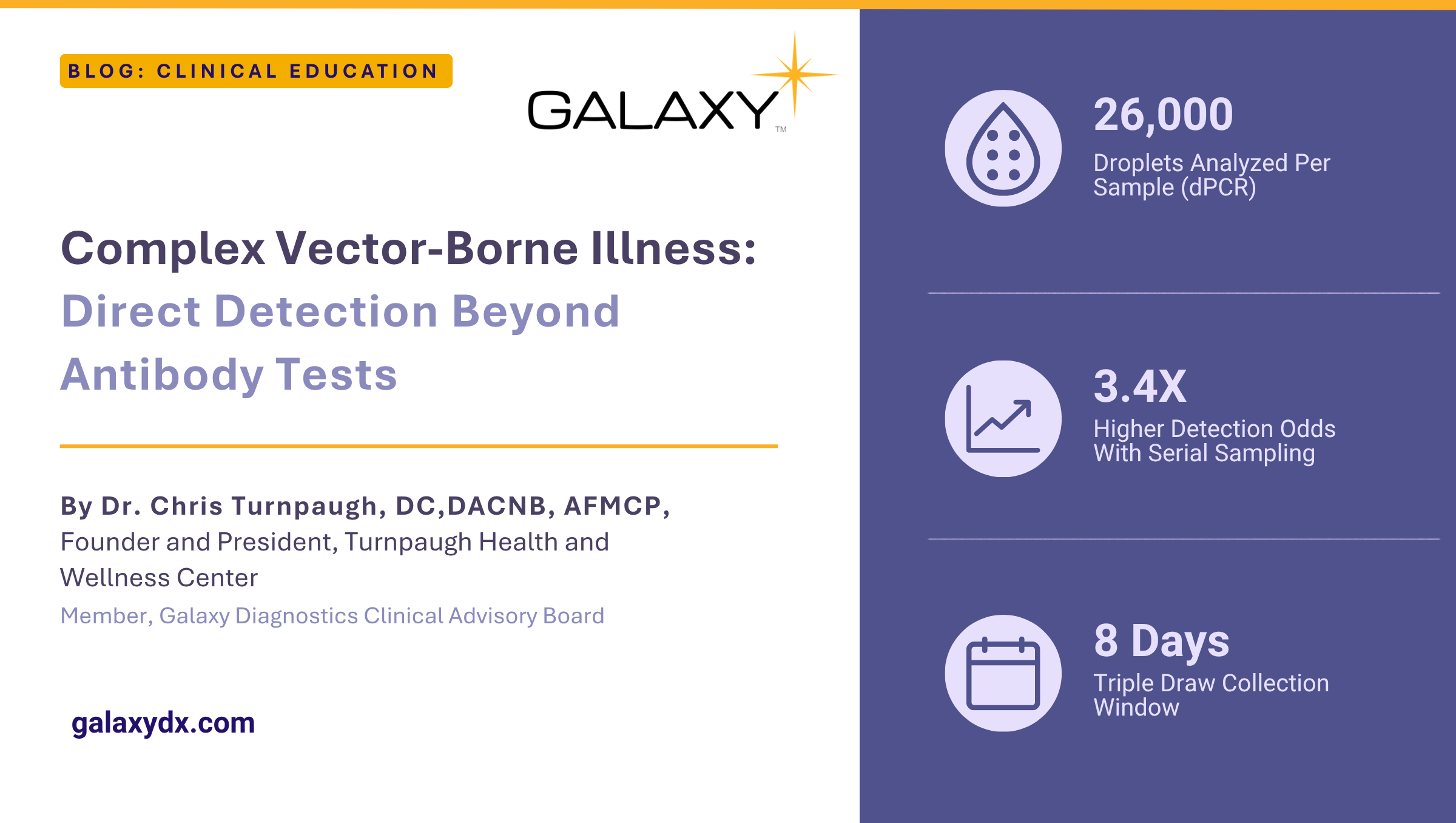
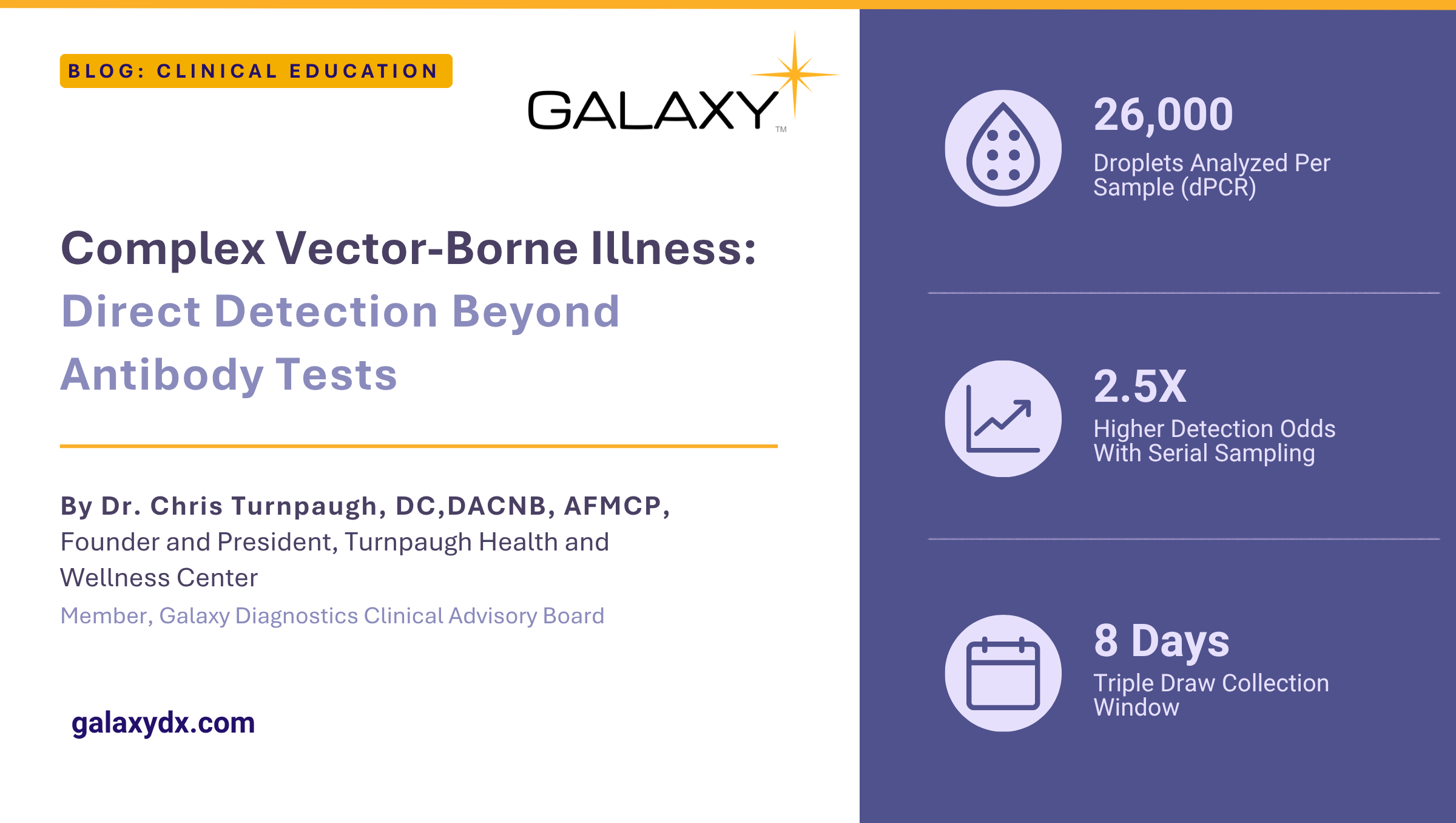
Galaxy Diagnostics’ triple draw collection protocol, in which samples are collected across three time points over an eight day period, is designed around this biology. Galaxy’s multiplexed assay includes Babesia and relapsing fever Borrelia alongside Bartonella.
In one retrospective study using the BAPGM enrichment culture and PCR platform, Bartonella was detected in 12.7% of patients tested from one collection and 33.3% of patients tested from three collections within one week. The authors reported an odds ratio of 3.4 [1]. The study evaluated Bartonella only and did not establish serial-collection performance for Babesia, Borrelia, or Galaxy’s current multiplexed digital PCR assay.
Dr. Breitschwerdt has offered a useful analogy for why a single collection can understate what is actually present: if you are on a boat in the middle of the ocean and you scoop a pail of water with no jellyfish in it, that does not mean there is no jellyfish in the ocean. Collected samples also undergo a BAPGM enrichment culture step intended to amplify low burdens of Bartonella before analysis [1].
What This Means for Testing
Low-abundance pathogens can be difficult to detect because very little pathogen material may be present in a particular sample, even when the clinical effects are significant. Some pathogens, including Bartonella, may also circulate intermittently. A single negative collection is therefore one snapshot in time, and serial sampling may improve the opportunity for detection when clinical suspicion remains high.
The Acute Lyme Bookend: Front-End Detection
Complex chronic presentations are only part of the clinical picture. Galaxy’s Lyme Borrelia Direct Detect (Nanotrap antigen test) is designed for the front end of the disease, at the moment of acute tick exposure, before serology has had time to develop.
In one 2015 study, urinary OspA was detected in all 24 pretreatment patients with clinician-diagnosed erythema migrans and in none of 117 asymptomatic controls [2]. The cohort was small, investigators had commercial interests in the technology, and an independent systematic review concluded that further clinical evaluation was needed [7].
Because antigen shedding begins early, this test can provide a confirmed answer at a stage when antibody testing would still be expected to read negative. Early direct detection paired with prompt antimicrobial treatment, guided by the ordering provider, represents one of the more straightforward clinical scenarios in the broader vector-borne illness workflow, since it addresses the pathogen before chronic, multi-system complications have the opportunity to develop.
What This Means for Testing
Acute presentation with a known or suspected tick exposure is a reason to consider antigen testing early, rather than waiting for an antibody response that may not yet be present.
Supporting the Whole Patient
Diagnosis is only the starting point. Dr. Turnpaugh’s session, presented in partnership with Quicksilver Scientific and Troscriptions, also addressed terrain preparation, pathogen-directed care, and recovery considerations alongside diagnostic decision-making.
Quicksilver Scientific is a functional medicine company that develops liposomal and nanoemulsion nutraceutical formulations designed to improve absorption and cellular delivery. Troscriptions develops buccal troche based health optimization products, including formulations built around methylene blue. During the webinar, methylene blue was discussed as having two potential roles within the broader protocol framework: lower-dose use intended to support mitochondrial function and higher-dose use intended to provide antimicrobial and biofilm support. These concepts were presented for educational context and should not be characterized as part of Dr. Turnpaugh’s own clinical use.
Specific protocols, product selection, and dosing decisions belong to the treating provider, made in partnership with the patient. Providers interested in the terrain support and recovery considerations discussed during the session can review Quicksilver Scientific’s Tick Borne Illness General Protocol for the three-phase approach discussed in the webinar, alongside the full webinar replay.
What This Means for Testing
A direct detection result, positive or negative, is the input that determines which path a patient needs next: pathogen-directed treatment, terrain and immune support, or both in sequence.
Disclosure: Dr. Chris Turnpaugh is a member of Galaxy Diagnostics’ Clinical Advisory Board and maintains an independent clinical practice, Turnpaugh Health and Wellness Center. The educational webinar this article is drawn from was presented in partnership with Quicksilver Scientific and Troscriptions, both of which offer commercial products discussed during the session. Galaxy Diagnostics’ Lyme Borrelia Direct Detect and BBB Direct Detect assays referenced in this article are Laboratory Developed Tests (LDTs). This content reflects Dr. Turnpaugh’s clinical experience and is intended for educational purposes only. It does not constitute medical advice, treatment guidance, or diagnostic guarantees. Any treatment decisions, including decisions involving products discussed by Quicksilver Scientific or Troscriptions, should be made in consultation with the patient’s treating provider.
Frequently Asked Questions
The following questions were submitted by clinicians during a Galaxy Diagnostics educational webinar presented by Dr. Chris Turnpaugh, alongside additional questions commonly asked by clinicians evaluating direct detection. Answers have been adapted from his responses and Galaxy’s approved clinical language.
What does a negative BBB Direct Detect (dPCR) result mean if the Galaxy Bartonella IgG Detect IFA is positive on the same sample?
This pattern is a known and explainable form of discordance rather than a contradiction. A patient with a robust immune response may clear the pathogen from circulation quickly enough that it is no longer detectable by dPCR at the time of collection, even while antibody evidence remains strongly positive. Alternatively, the positive IFA may reflect a prior exposure that has already resolved. Titer level and treatment history both inform interpretation.
What is the difference between standard qPCR and Galaxy's digital PCR platform?
The gap between standard qPCR and digital PCR is not incremental. It represents a fundamentally different way of measuring DNA. Standard qPCR is a relative quantification method that loses sensitivity at low pathogen burdens. Digital PCR works differently at a fundamental level: the sample is partitioned into tens of thousands of individual reaction chambers, each containing zero or one copy of the target DNA. This absolute quantification approach means dPCR can detect and count target DNA even at extremely low copy numbers that fall well below the detection threshold of standard qPCR.
Can Borrelia burgdorferi be transmitted through a spider bite?
Human transmission of Borrelia burgdorferi through a spider bite has not been established in the peer-reviewed literature [8,9]. In the United States, infected blacklegged ticks are the recognized vector for Lyme disease [10]. Lyme disease skin findings may sometimes be mistaken for a spider bite, but that does not mean the spider transmitted the pathogen [11].
How is Bartonella typically transmitted, and is it always tick-borne?
No. Bartonella henselae is not exclusively tick-associated. Cat fleas can transmit the organism among cats, and human cat-scratch disease commonly follows scratches or bites from infected cats [12,13]. Reviews of Bartonella transmission also describe the role of fleas and other arthropod vectors across species [14,15].
Does the temporary blue discoloration some patients notice with methylene blue go away on its own?
Yes. Temporary blue discoloration of urine, and in some cases the mouth, is an expected and reversible effect of methylene blue and resolves on its own. Patients using methylene blue as part of a provider directed plan should be advised of this in advance so it is not mistaken for a concerning symptom.
What can help reduce Herxheimer type reactions when addressing a confirmed pathogen?
In Dr. Turnpaugh’s clinical experience, preparing the body before addressing a confirmed pathogen, including attention to detoxification pathways, antioxidant status, and adequate vitamin D levels, can reduce the intensity of Herxheimer type reactions. Specific protocols should be developed with the treating provider based on the individual patient’s presentation and tolerance.
Why doesn't a positive IgM result necessarily mean a patient has a recent or active infection?
IgM antibodies are well known to be polyreactive, meaning a dysregulated immune system can generate positive IgM results without a genuine recent exposure driving them. A patient who tests IgM positive to a large number of pathogens at once is more likely reacting broadly due to immune dysregulation than experiencing dozens of simultaneous recent infections.
If a patient tests negative on direct detection, does that rule out vector-borne illness?
No. A negative direct detection result means the pathogen was not detected in that particular sample at that particular time. It does not confirm the pathogen was never present. Clinical suspicion, exposure history, and symptom pattern still carry weight even after a negative result.
References
- Pultorak EL, Maggi RG, Mascarelli PE, Breitschwerdt EB, Serial Testing from a 3-Day Collection Period by Use of the Bartonella Alphaproteobacteria Growth Medium Platform May Enhance the Sensitivity of Bartonella Species Detection in Bacteremic Human Patients, Journal of Clinical Microbiology, 2013, 51(6), 1673–1677, https://doi.org/10.1128/JCM.00123-13.
- Magni R, Espina BH, Shah K, Lepene B, Mayuga C, Douglas TA, Espina V, Rucker S, Dunlap R, Petricoin EF III, Kilavos MF, Poretz DM, Irwin GR, Shor SM, Liotta LA, Luchini A, Application of Nanotrap Technology for High-Sensitivity Measurement of Urinary Outer Surface Protein A Carboxyl-Terminus Domain in Early-Stage Lyme Borreliosis, Journal of Translational Medicine, 2015, 13(1), Article 346, https://doi.org/10.1186/s12967-015-0701-z.
- Kugeler KJ, Schwartz AM, Delorey MJ, Mead PS, Hinckley AF, Estimating the Frequency of Lyme Disease Diagnoses, United States, 2010–2018, Emerging Infectious Diseases, 2021, 27(2), 616–619, https://doi.org/10.3201/eid2702.202731.
- McCormick DW, Rassoulian-Barrett SL, Hoogestraat DR, Salipante SJ, SenGupta D, Dietrich EA, Cookson BT, Marx GE, Lieberman JA, Bartonella spp. Infections Identified by Molecular Methods, United States, Emerging Infectious Diseases, 2023, 29(3), 467–476, https://doi.org/10.3201/eid2903.221223.
- Centers for Disease Control and Prevention, Surveillance Case Definitions for Current and Historical Conditions: 2026 Nationally Notifiable Condition List, National Notifiable Diseases Surveillance System, 2026, accessed July 18, 2026, CDC Surveillance Case Definitions. No DOI.
- Luria BJ, Levy JK, Lappin MR, Breitschwerdt EB, Legendre AM, Hernandez JA, Gorman SP, Lee IT, Prevalence of Infectious Diseases in Feral Cats in Northern Florida, Journal of Feline Medicine and Surgery, 2004, 6(5), 287–296, https://doi.org/10.1016/j.jfms.2003.11.005.
- Raffetin A, Saunier A, Bouiller K, Caraux-Paz P, Eldin C, Gallien S, Jouenne R, Belkacem A, Salomon J, Patey O, Talagrand-Reboul E, Jaulhac B, Grillon A, Unconventional Diagnostic Tests for Lyme Borreliosis: A Systematic Review, Clinical Microbiology and Infection, 2020, 26(1), 51–59, https://doi.org/10.1016/j.cmi.2019.06.033.
- Suffridge PJ, Smoller BR, Carrington PR, Spiders and Borrelia burgdorferi: No Evidence of Reservoir Occurrence in Central Arkansas, International Journal of Dermatology, 1999, 38(4), 296–297, https://doi.org/10.1046/j.1365-4362.1999.00602.x.
- Vetter RS, Swanson DL, Weinstein SA, White J, Do Spiders Vector Bacteria During Bites? The Evidence Indicates Otherwise, Toxicon, 2015, 93, 171–174, https://doi.org/10.1016/j.toxicon.2014.11.229.
- Centers for Disease Control and Prevention, How Lyme Disease Spreads, 2024, accessed July 18, 2026, CDC Lyme Disease Transmission. No DOI.
- Osterhoudt KC, Zaoutis T, Zorc JJ, Lyme Disease Masquerading as Brown Recluse Spider Bite, Annals of Emergency Medicine, 2002, 39(5), 558–561, https://doi.org/10.1067/mem.2002.119509.
- Chomel BB, Kasten RW, Floyd-Hawkins K, Chi B, Yamamoto K, Roberts-Wilson J, Gurfield AN, Abbott RC, Pedersen NC, Koehler JE, Experimental Transmission of Bartonella henselae by the Cat Flea, Journal of Clinical Microbiology, 1996, 34(8), 1952–1956, https://doi.org/10.1128/JCM.34.8.1952-1956.1996.
- Zangwill KM, Hamilton DH, Perkins BA, Regnery RL, Plikaytis BD, Hadler JL, Cartter ML, Wenger JD, Cat Scratch Disease in Connecticut: Epidemiology, Risk Factors, and Evaluation of a New Diagnostic Test, New England Journal of Medicine, 1993, 329(1), 8–13, https://doi.org/10.1056/NEJM199307013290102.
- Billeter SA, Levy MG, Chomel BB, Breitschwerdt EB, Vector Transmission of Bartonella Species with Emphasis on the Potential for Tick Transmission, Medical and Veterinary Entomology, 2008, 22(1), 1–15, https://doi.org/10.1111/j.1365-2915.2008.00713.x.
- Chomel BB, Boulouis HJ, Maruyama S, Breitschwerdt EB, Bartonella spp. in Pets and Effect on Human Health, Emerging Infectious Diseases, 2006, 12(3), 389–394, https://doi.org/10.3201/eid1203.050931.
About Galaxy Diagnostics
Galaxy Diagnostics provides evidence-driven direct and indirect testing tools for clinicians evaluating complex vector-borne and zoonotic disease cases. The company focuses on diagnostic clarity, scientific precision, and clinical education for providers navigating ambiguous or multi-system presentations.
Explore Galaxy’s Bartonella Testing Bundle and Suspected Tick-borne Bundle to see which test fits a specific patient.