

Galaxy Diagnostics advances testing by continually refining how science is applied to complex pathogen detection.
The enhancement to BBB Direct Detect dPCR happens before the dPCR search itself. We now analyze 10x more blood volume and concentrate the sample 5x before the dPCR search begins.
At Galaxy, the search is the same.
The input is stronger.
A negative result can reflect timing, biology, or the amount of pathogen material present in the sample.
A single blood collection is one snapshot in time. When pathogen presence is low or intermittent, the pathogen may not be detectable in that sample on that day.
Bartonella, Babesia, and Borrelia each behave in ways that can make detection difficult. They may circulate at very low levels, localize in tissues or cells, or appear inconsistently in peripheral blood.
Even when pathogen material is present, it may not be captured in the specific portion analyzed. This is the low-abundance detection challenge the enhanced method was designed to address.
BBB Direct Detect (dPCR) still uses digital PCR to search for pathogen DNA. The enhancement happens before that step.
We increased the collection requirement to 10 mL and now use more of the provided sample, concentrating it 5x before testing begins. This increases the material that enters the dPCR search. From there, the sample is partitioned into up to 26,000 aliquots, each analyzed individually for pathogen DNA.
Some cases remain clinically suspicious after a negative result.
That is the challenge the enhanced method was built to address: improving what enters the dPCR search when clinical suspicion remains high.

Persistent Symptoms: When symptoms continue, but prior testing was negative
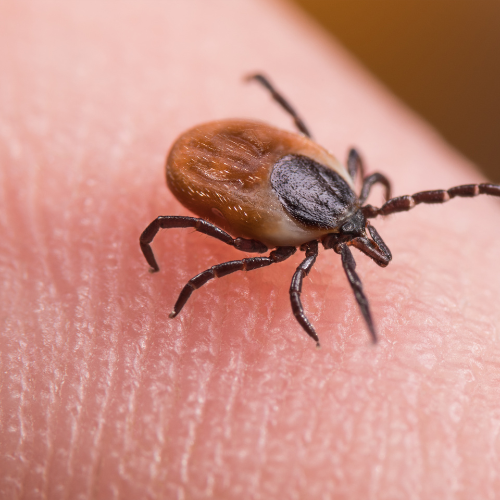
Known or Suspected Exposure: Environmental, travel, or tick-borne risk factors are present

High Clinical Suspicion: The clinical picture still supports further tick-borne disease
First, we concentrate the sample like espresso. Then the same dPCR haystack search begins.
We don’t change the beans: we concentrate
the same materials so the signal is richer and more detectable.

To understand the updated BBB Direct Detect (dPCR) sample preparation step, think drip coffee to espresso.
Drip coffee spreads flavor through more water. The flavor may be present, but diluted.
The same idea applies here:
For providers, that means a better chance of capturing low-abundance pathogen DNA when clinical suspicion
The haystack search hasn’t changed. We only make the signal stronger before the same dPCR search begins.
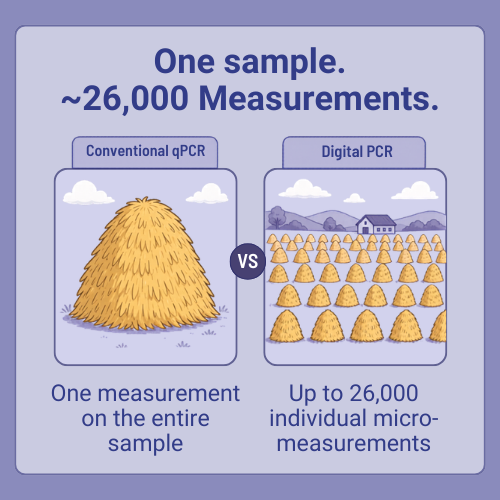
The digital PCR step is the needle-in-the-haystack search.
That search has not changed. What changed is the strength of the sample entering it.
Here is how it works:
For providers, that means better detection probability when low-abundance pathogen DNA is difficult to capture.

FEATURED WEBINAR RECORDING
Galaxy Diagnostics Clinical Advisor
Join Dr. Turnpaugh for an in-depth look at why negative results occur, what the data shows, and how to move forward with confidence.
We updated the sample preparation process. The method now analyzes 10x more blood volume per sample and includes a 5x concentration step before digital PCR testing. The dPCR technology itself is unchanged. |
No. The dPCR platform is the same. What changed is the material going into the search. By analyzing more volume and concentrating the sample, we improve the probability of detecting low-abundance pathogens when they are present at the time of collection. |
No. Prior results were generated using the method available at the time. A negative result reflects what was detectable in that specific sample under those conditions. The enhanced method improves detection probability by starting with more material. This is an evolution of the approach, not a correction of prior results. |
Three biological factors can contribute. Bartonella cycles in and out of the bloodstream, so draw timing matters. Babesia resides inside red blood cells and Borrelia can disseminate into tissues, making blood-based detection more challenging. And even when a pathogen is present, it may not appear in the specific portion of blood tested. |
The enhanced BBB Direct Detect (dPCR) method requires a total of 10 mL of whole blood collected in lavender-top EDTA tube(s). If you still have existing non-expired kits with 6 mL lavender-top tubes, please send two tubes so the total volume sent to Galaxy is at least 10 mL. |
Yes. Because of the cyclical and low-abundance nature of these pathogens, a single blood collection is one snapshot. A triple-draw protocol provides three opportunities to capture the pathogen. We still recommend triple-draw collection whenever clinically appropriate. |
Watch the webinar recording with Dr. Chris Turnpaugh, When BBB Results Are Negative: Immune Dysregulation and Where to Look Next. The recording covers clinical interpretation, immune dysregulation patterns, and protocol considerations that may help shift the trajectory of complex patient presentations. |
Connect with Galaxy for next-step guidance.