

Galaxy Diagnostics focuses on bringing new science into clinical care with rigor, transparency, and respect for the complexity of vector-borne disease.
We exist to help clinicians navigate difficult cases with better tools, while building the foundation for the diagnostics patients will need next.
Most discoveries never reach patients. Galaxy exists to close that gap, carefully and correctly.
Vector-borne diseases are biologically complex. Distinguishing active infection from past exposure remains one of the hardest challenges in diagnostics.
Scientific research generates promising biological signals every year. Translation is the work of determining when, and how, those discoveries can become reliable diagnostic tests that meaningfully inform patient care.
Advancing diagnostics requires discipline: understanding the limits of existing methods, rigorously evaluating new approaches, and introducing innovation only when it improves clinical clarity.
Galaxy was built to do this work deliberately, protecting patient care while preserving clinical trust.
Galaxy advances new diagnostics through a structured, evidence-led process.
We distinguish clearly between:
• Early scientific discovery
• Assay development and validation in a CLIA-regulated laboratory setting
• Diagnostic readiness for real-world clinical use
Our responsibility is to evaluate whether research-developed assays perform reliably under the rigor of clinical laboratory standards, and to advance them only when they are meaningful, reproducible, and appropriate for patient care.
Galaxy is led by people who understand both the science and the realities of bringing diagnostics into clinical practice.
Our leadership team brings deep experience across diagnostics, FDA-regulated environments, clinical operations, commercialization, and regulatory affairs.
This is a team built to execute, not experiment.
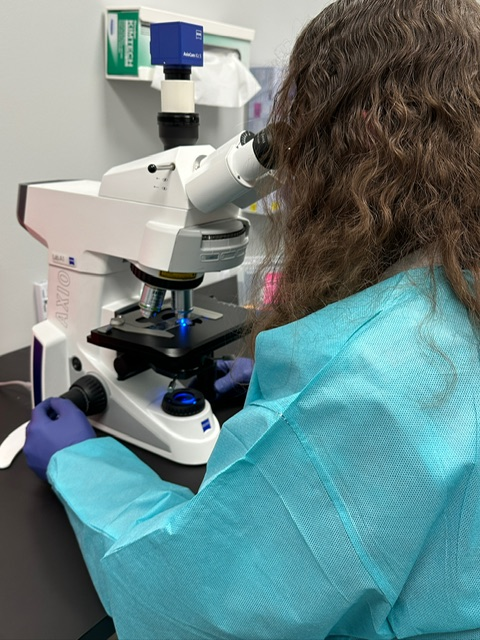
Galaxy is supported by an experienced board that provides oversight, accountability, and long-term perspective.
Galaxy works closely with advisors across academic research, clinical care, and diagnostic infrastructure.
Their guidance helps ensure relevance, rigor, and real-world applicability.
We’ve built a team to execute on this vision.
Galaxy is led by people who understand both the science, and what it takes to make diagnostics real.
I joined Galaxy as CEO in June of 2024 because I saw the opportunity to change millions of lives. And because this problem is personal.
My husband tested negative for Lyme disease under the current standard of care. He was misdiagnosed. And he ultimately passed away.
That experience shapes how Galaxy leads, and why we are committed to advancing diagnostics carefully, transparently, and with accountability.
Our leadership team is supported by an experienced board and advisors, including leaders from Labcorp and Quest, who help ensure what we build works in the real world.
Read more from the CEO below.
Galaxy Diagnostics was honored to collaborate with the late Dr. Brandon L. Jutras, whose pioneering research helped advance understanding of novel biological signals relevant to Lyme disease and opened new possibilities for diagnostic innovation.
Dr. Jutras served as an Associate Professor at Northwestern University Feinberg School of Medicine. The licensed intellectual property underlying Galaxy’s collaboration with Dr. Jutras originated from his research at Virginia Tech.
His scientific contributions remain an important part of the foundation of this work as Galaxy continues to evaluate how emerging discoveries can be responsibly translated into clinically meaningful diagnostics under appropriate laboratory and clinical standards.

Galaxy delivers clinically actionable testing today while continuing to invest in the future of vector-borne disease diagnostics.
Clinicians partner with Galaxy because we prioritize clarity, transparency, and long-term trust.


Galaxy will continue to share updates as meaningful scientific and clinical milestones are reached.
We remain committed to clear communication, appropriate expectations, and long-term progress.